




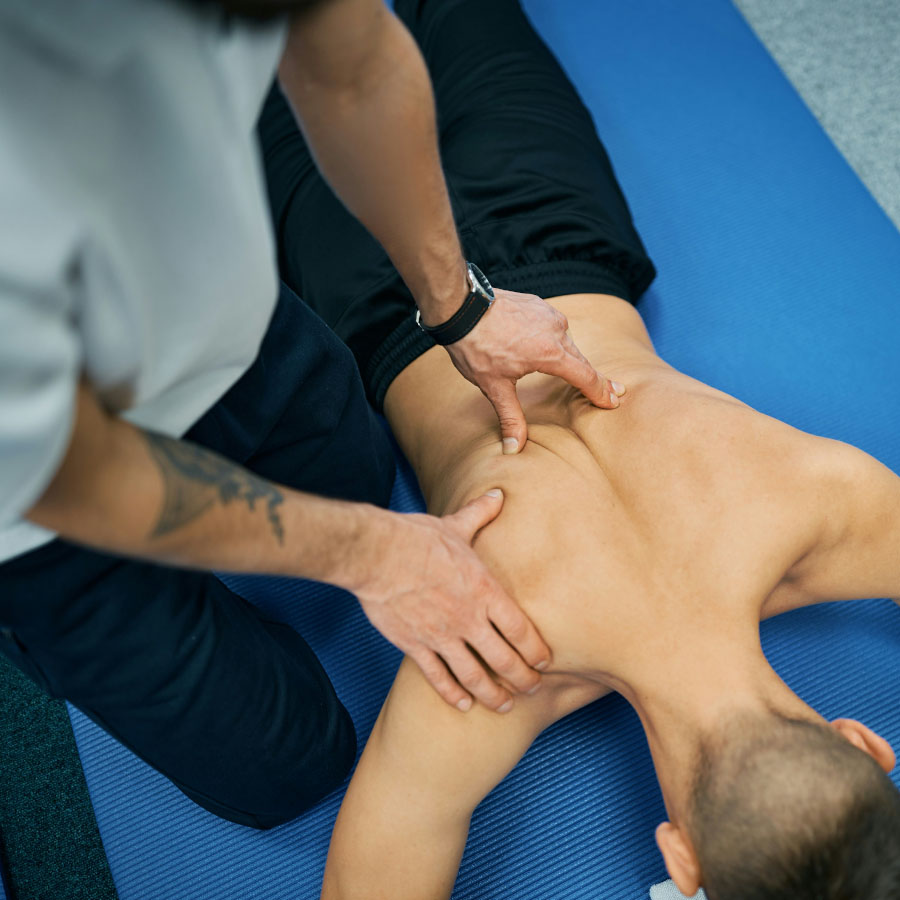



Frozen shoulder is the painful and gradual stiffening of the shoulder capsule. This painful stiffening over time leads to sleep disturbance and limits your ability to use your arm in day-to-day activities.
What is the shoulder capsule?
The shoulder capsule is tissue that surrounds the shoulder joint and supplies the joint with nutrients and lubricating fluid.
Why did I get it?
Frozen shoulder affects one in 20 people and is more common in women than men. Most cases of frozen shoulder happen between the ages of 40 and 60. The exact cause of frozen shoulder is unknown. For some reason your body has an over reactive response to a minor injury and tries to heal your shoulder capsule with scar tissue. This leads to pain and stiffness. People with diabetes or history of recent shoulder surgery or recent injury have an increased chance of developing this condition. Frozen shoulder is often confused with other shoulder problems but a true frozen shoulder is categorised into three distinct phases.
- Painful Phase
- Stiffness Phase
- Thawing Phase
What happens in my shoulder when I have a frozen shoulder?
- Painful Phase – Your body increases the blood flow to your shoulder to try and lay down new tissue. This causes a pain similar to toothache and is why your shoulder is particularly painful at night and can feel incredibly painful to lie on. This stage normally lasts between two to nine months, but can take longer if you are diabetic.
- Thawing Phase – During the thawing stage your shoulder will start to loosen and will slowly become easier to move. This happens because your body starts to break down the unnecessary scar tissue and the shoulder capsule starts to become more flexible. This last stage can last from five months to four years. In some cases your full range of motion may never fully return.
- Stiffening Phase – Scar tissue starts to form in and around the shoulder capsule making it incredibly difficult to move. At this stage pain is often much more manageable and you are able to sleep better at night. In addition to the stiffness, your muscles may start to waste due to you not using the affected shoulder as much. This stage can last from four to 12 months. Thawing Phase – During the thawing stage your shoulder will start to loosen and will slowly become easier to move. This happens because your body starts to break down the unnecessary scar tissue and the shoulder capsule starts to become more flexible. This last stage can last from five months to four years. In some cases your full range of motion may never fully return.
What can I do to help my symptoms during the Painful Phase?
Activity modification/relative rest
Activity modification does not mean you stop moving or using your shoulder altogether. Although it sounds straightforward, avoiding activities over your head or behind your back can help to reduce the irritation of your shoulder.
Maintaining good posture
Your shoulder movement can be hugely affected by your posture. If you slouch, your ability to lift your arm above your head reduces by approximately 30 per cent. Sitting and standing in a good posture with your shoulders back will help your movement as well as prevent the tendons in your shoulder catching. Also try not to slouch and lean through our shoulders and elbows. This squashes all the structures in your shoulder against the ridge above the joint, causing pain and irritation.
Simple analgesia and anti-inflammatories
Simple analgesia such as paracetamol can be used to dull the pain but does not cure the problem. Anti-inflammatories such as ibuprofen can also be effective. It is best to consult your GP if you have not taken these before. Seek further advice from your GP if your symptoms become unmanageable.
Ice/Cryotherapy
Icing your shoulder can be a very effective way of reducing your pain. Place a wet flannel and a pack of frozen peas on your shoulder for 20 minutes up to every hour. Check the skin under the ice every five minutes to avoid an ice burn. Once the pain begins to settle you can then start to ice your shoulder less frequently.
Injection Therapy
Injection therapy can be a very effective way of reducing your pain during this stage if anti-inflammatories or ice are having little effect. This can be done by either your specialist GP or by an enhanced role physiotherapist. Injections are not for everyone and may not be suitable for those with certain medical conditions.
Sleeping position
Sleeping on your shoulder can be very painful during this stage. Try to sleep on your back or on the opposite shoulder with a pillow under the armpit of the affected shoulder.
What can I do to help my symptoms during the stiffness phase?
Active assisted range of movement exercises Keeping your shoulder moving during this stage is very important but you should avoid pushing too far into very painful movement, as this can be counter productive. Active assisted stick exercises are a great way to keep your shoulder moving as well as trying to keep your muscles working.
What can I do to help my symptoms during the stiffness phase?
At a point that is different for every frozen shoulder, you will feel your shoulder starting to move more. During this time it is important to regularly exercise your shoulder and use it as much as possible in day to day activities. When exercising at this stage it is important to start working into the resistance/tightness but this should never be painful. If you are unsure, seek advice from your GP or a physiotherapist.
What should I avoid?
- Correct your posture – if you slouch, your ability to lift your arm above your head reduces by approximately 30 per cent. Sitting and standing in a good posture with your shoulders back will help your movement as well as prevent the tendons in your shoulder catching
- Avoid excessive unaccustomed activity with the hands above shoulder height e.g. doing tasks like painting the ceiling, hanging curtains and trimming the hedge in short periods of time
- Take breaks from repetitive shoulder movements and heavy lifting
- Try not to slouch as this squashes all the structures in your shoulder against the ridge above the joint, causing pain and irritation
- If you exercise, ensure you balance your training programme to incorporate strength work for all muscle groups
Surgical input and Adhesive Capsulitis – when do I need to seek further advice?
If you suffer from any of the following it is important you see your GP before starting any form of self-management.
- Night pain which severely affects your sleep
- Shoulder pain associated with a fever or night sweats
- Restricted movement that is heavily affecting your ability to function day to day
- Swelling or redness
- Pain following an injury or traumatic event (fall, sports injury, epileptic fit, electric shock)
- Pins and needles or numbness Left shoulder pain which is associated with shortness of breath or clamminess
Information & Guidance
Access our Health Hub
Long Term Condition
People living with Long Term Conditions (LTC’s) are more likely to experience mental symptoms due to their physical symptoms causing anxiety, worry, overthinking and avoidance.







Related Articles

Pennine’s Fracture Liaison Service: Quietly transforming lives in Oldham
Discover how Pennine MSK’s Fracture Liaison Service in Oldham is leading the way in osteoporosis care, prevent

Tennis injuries: symptoms and prevention
Tennis injuries can be short or long term – these last ones being associated to the upper body (overuse).

5 Simple Tips for Back Care
Back pain is often, it’s your body reminding you to move, rest, or adjust your habits.

The benefits of physical activity for mental health
The benefits of finding even small moments for movement in our everyday lives are great.