



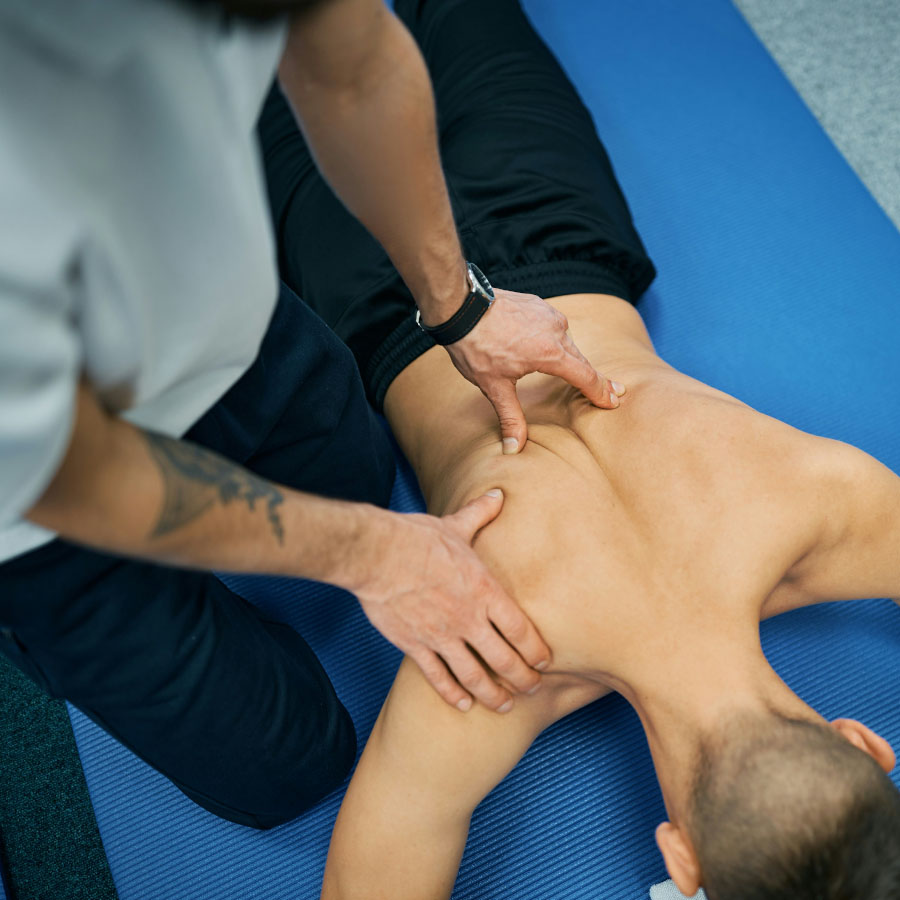



Going back to work can be a pain in the neck – literally

Article first published 7/01/2017 online by The Hippocratic Post
In our clinics, the majority of injuries we see are caused by prolonged static inactivity, not acute trauma, often caused by people sitting at their desks for hours at a time without moving. Studies show that two thirds of office workers now even eat lunch at their desks, and nearly a quarter of us work throughout lunch altogether – a trend that means that they may be sitting down for most of the day.
Sitting in particular has specific negative effects on the muscle and joints including:
▪ A loss in the normal curve of the spine
▪ Increased pressure in the discs (cushions) of the spine
▪ Increased tension of the spinal cord
▪ Stretching and lengthening of certain supporting ligaments of the back and neck
▪ Shortening of certain postural muscles leading to muscle imbalances
Some offices now encourage workers to stand while they work, but the solution is not to replace all-day sitting with all-day standing as this can cause problems in itself with over-tired feet and knees.
The trend to look down while texting and using laptop computers and tablets means that neck injuries, so called “Text Neck” are just as common as lower back pain. This isn’t surprising when you think that the load applied to the neck by bending the head forward to a 60 degree angle is equivalent to the weight of an eight-year-old child.
The average human head weighs around 17 pounds and this is effectively quadrupled because of the angle of the neck.
In addition to this, studies have found that people who are engaged with digital technology actually ‘zone out’ and tend to move and even blink less. Unfortunately, this can lead to long-term damage of the muscles and ligaments as a result of prolonged tension through tissue and fatigue of supporting muscles.
So what can we do about it?
Here are 5 top tips to offset the negative effects if sitting:
1. Stretch
While sitting there are some simple exercises you can do to stretch tight muscles and joint. Check the Charted Society of Physiotherapists website for some examples. These can be done easily sitting right at your desk.
2. Walk
Walking is probably the most simple way to combat muscle and joint problems, plus is has numerous other added benefits. Try aim for the magical 10,00 steps per day for maximal benefit. Have a look at the NHS Live Well website for more information.
3. Talk
Talking to colleagues helps to build relationships and improve our overall Mental Wellbeing. It also helps you to “unplug” from the workplace and can even increase
your productivity. If you need more help you can even get software such as Time out for Mac or Work Rave for Windows PC’s that will lock your computer and force you to unplug.
4. Take time out
Just like talking, taking a moment in the day to practice some deep breathing or mindfulness is a great way to improve your working habits. Some great resources for this include Calm.com, Headspace, or Buddhify. Check the NHS Choices website for more info on this.
5. Exercise
You knew if would be in there! If there was a magic bullet to cure all ailments, then this is it!! Try get your recommended 150 minutes of moderate intensity throughout the day. This could be a short lunchtime gym session, or even taking the stairs when you get to work, at lunch and when you go home, every little bit counts! Check out Dr Mike Evans great video below on how we can make our day harder for more info.
Miles Atkinson is Head of Occupational Health Services at Crystal Palace Physio Group and is Vice Chair of the Association of Charted Physiotherapists in Occupational Health and Ergonomics.
Information & Guidance
Access our Health Hub
Long Term Condition
People living with Long Term Conditions (LTC’s) are more likely to experience mental symptoms due to their physical symptoms causing anxiety, worry, overthinking and avoidance.







Related Articles

Pennine’s Fracture Liaison Service: Quietly transforming lives in Oldham
Discover how Pennine MSK’s Fracture Liaison Service in Oldham is leading the way in osteoporosis care, prevent

Tennis injuries: symptoms and prevention
Tennis injuries can be short or long term – these last ones being associated to the upper body (overuse).

5 Simple Tips for Back Care
Back pain is often, it’s your body reminding you to move, rest, or adjust your habits.

The benefits of physical activity for mental health
The benefits of finding even small moments for movement in our everyday lives are great.